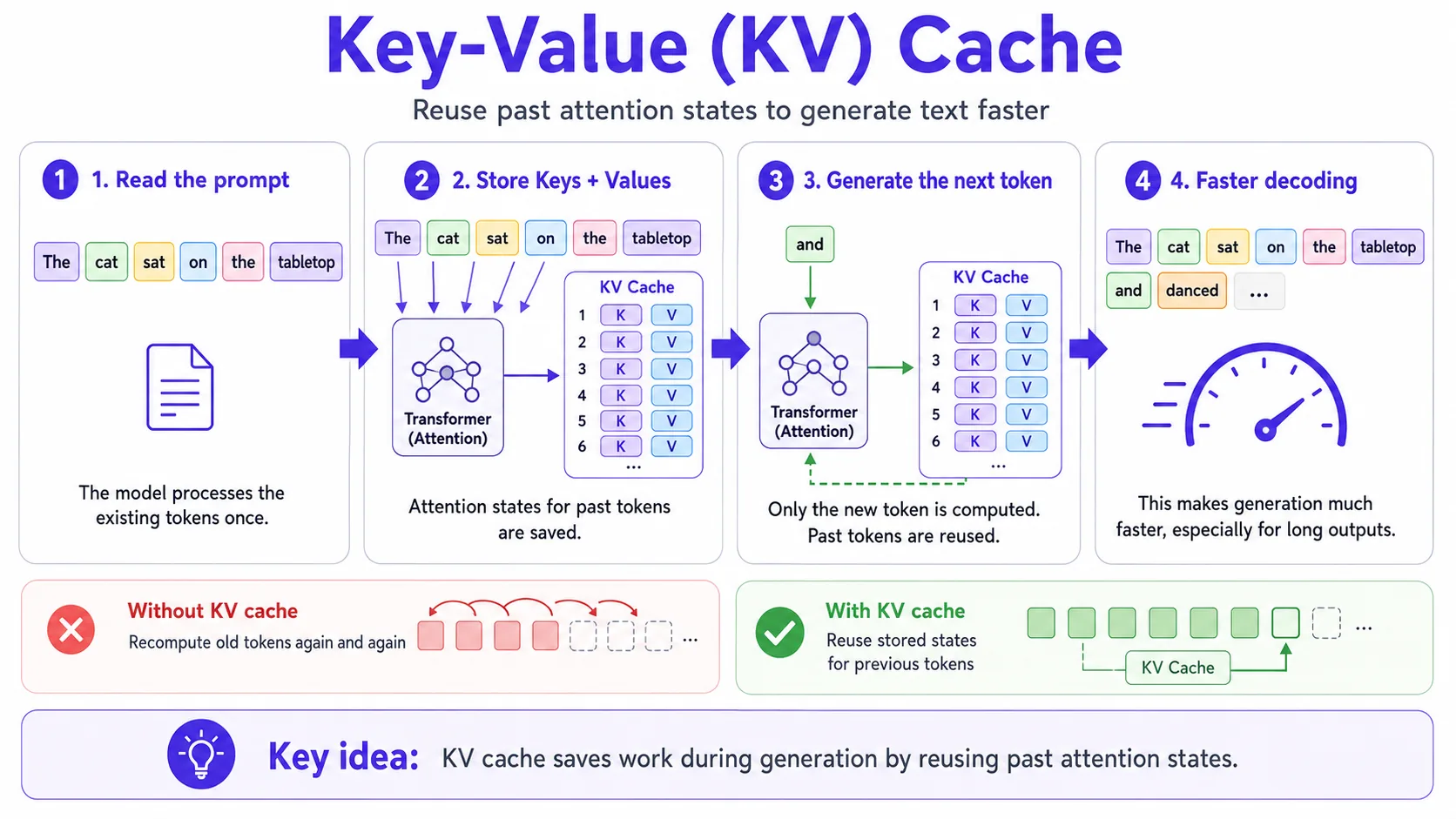
Key-Value (KV) कैश
Autoregressive generation के दौरान KV caching पिछले tokens के key-value tensors store करती है। हर नए token के लिए पूरा prefix फिर से compute करने के बजाय मॉडल cached representations reuse करता है। इससे लंबे outputs की latency घटती है, लेकिन हर active request के लिए memory pressure बढ़ता है।
LLM applications का production control plane
Expert-level LLM systems में एक perfect model से ज्यादा routing, caching, evaluation, safety checks और feedback loops मायने रखते हैं। Reliable platform तय करता है कि कौन-सा model call करना है, कौन-सा context retrieve करना है, कब cheaper model इस्तेमाल करना है, कब escalate करना है और regressions कैसे detect करने हैं।
Requests normalize करता है, rate limits लागू करता है, tenant metadata जोड़ता है और candidate models चुनता है।
Task difficulty, latency budget और risk के आधार पर small, large या specialized model चुनता है।
Retrieval quality, answer quality, citation faithfulness, safety और schema validity को score करता है।
Prompts, retrieved chunks, model versions, token counts, latency percentiles और failure modes track करता है।
Mixture of Experts
Mixture of Experts tokens या examples को specialized expert networks के subset से route करता है। इससे हर token के लिए हर parameter इस्तेमाल किए बिना parameter count बढ़ सकता है। Trade-offs हैं routing complexity, load balancing, communication overhead और कठिन debugging।
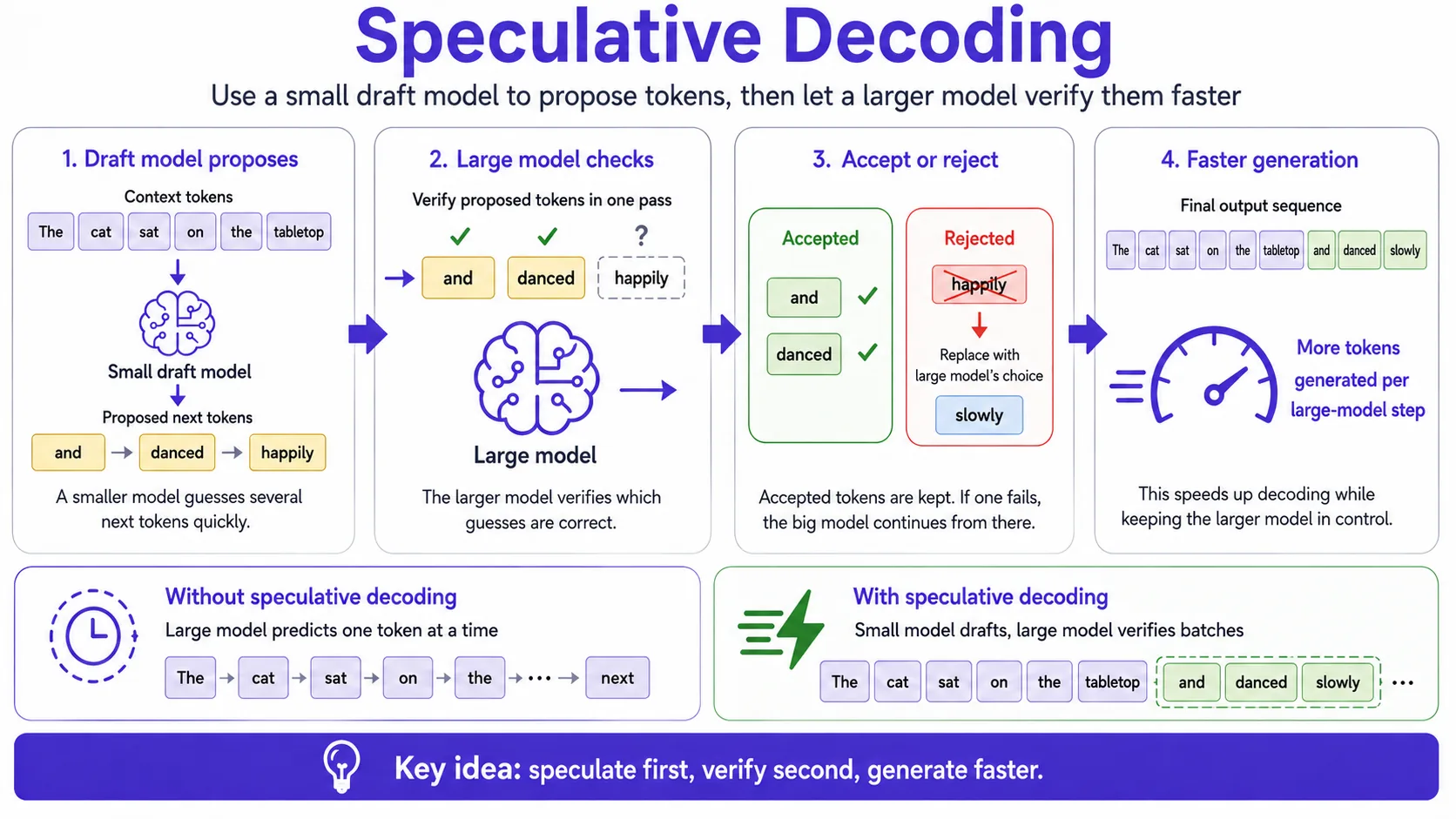
स्पेक्युलेटिव डिकोडिंग
Speculative decoding tokens propose करने के लिए draft model या draft procedure और उन्हें verify करने के लिए target model इस्तेमाल करता है। Exact speculative sampling algorithms target model की output distribution बनाए रख सकते हैं; heuristic variants speed के लिए exactness trade कर सकते हैं। Speedup acceptance rate, draft cost, sequence और batch shape, runtime और hardware पर निर्भर है।
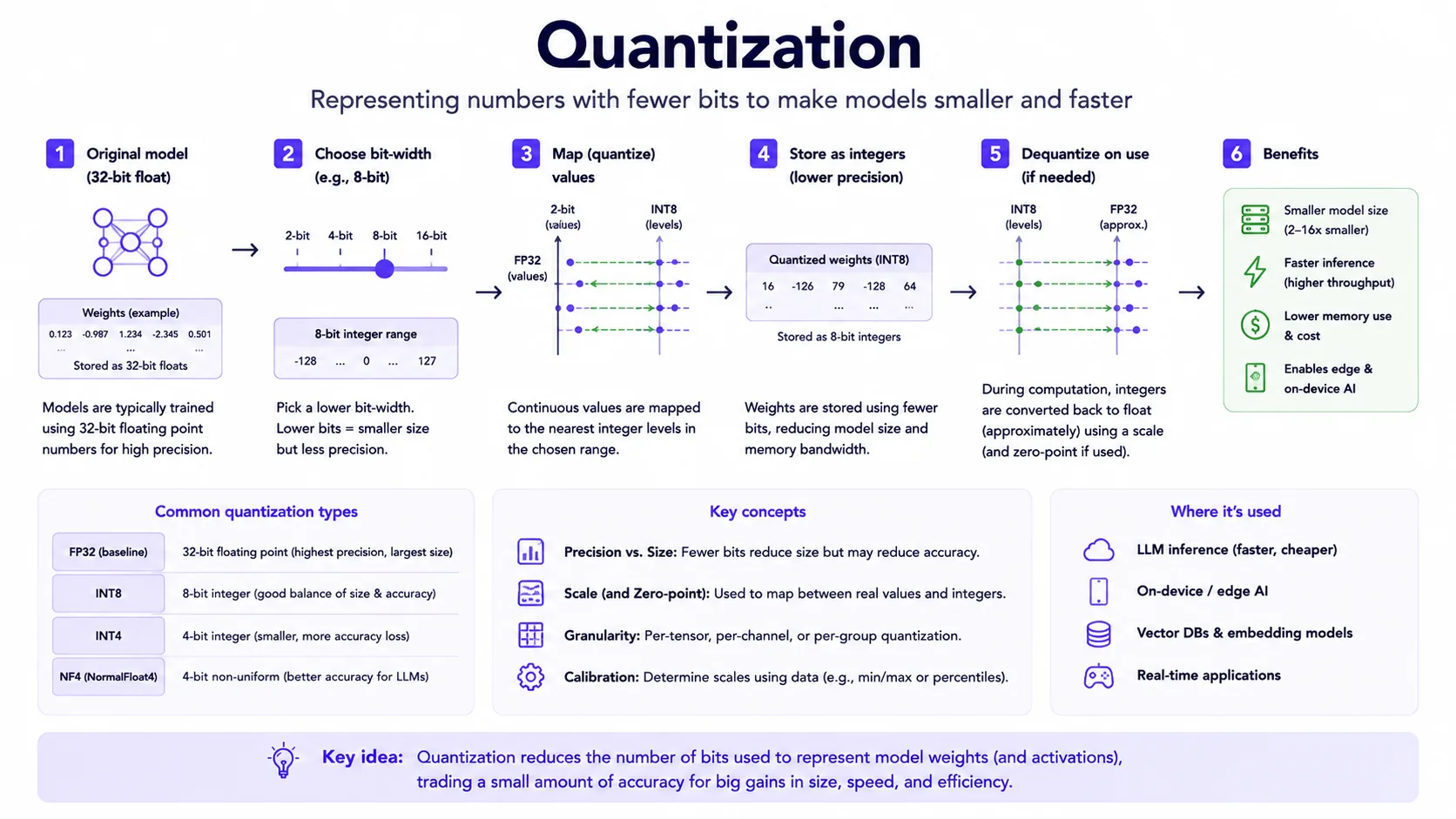
Quantization
Quantization model weights, activations या caches की precision घटाता है, जैसे 16-bit से 8-bit या 4-bit। चुना हुआ format hardware, kernels, runtime और workload support करें तो memory use घट सकती है और throughput बेहतर हो सकता है; लेकिन quality, calibration या tool-call reliability भी खराब हो सकती है।
LoRA और Fine-Tuning
LoRA आम तौर पर base model freeze करता है और low-rank adapter parameters train करता है, जिससे full fine-tuning की तुलना में trainable parameter count और अक्सर memory requirements घटते हैं। Behavior, style, format या task/domain adaptation के लिए यह उपयोगी है, लेकिन facts बार-बार बदलें तो retrieval का भरोसेमंद substitute नहीं; knowledge adaptation फिर भी data, training setup और evaluation पर निर्भर है।
Model optimization से preference tuning, observability, evaluation, safety, routing और cost control की ओर बढ़ें।
Direct Preference Optimization (DPO) और reinforcement learning from human feedback (RLHF)
RLHF और DPO human या preference data के जरिए model behavior optimize करते हैं। RLHF में आम तौर पर reward modeling और policy optimization शामिल होते हैं। DPO simpler objective के साथ preferences सीधे optimize करता है। दोनों preference quality पर निर्भर हैं और raters जिस चीज़ को reward करें उस पर overfit कर सकते हैं।
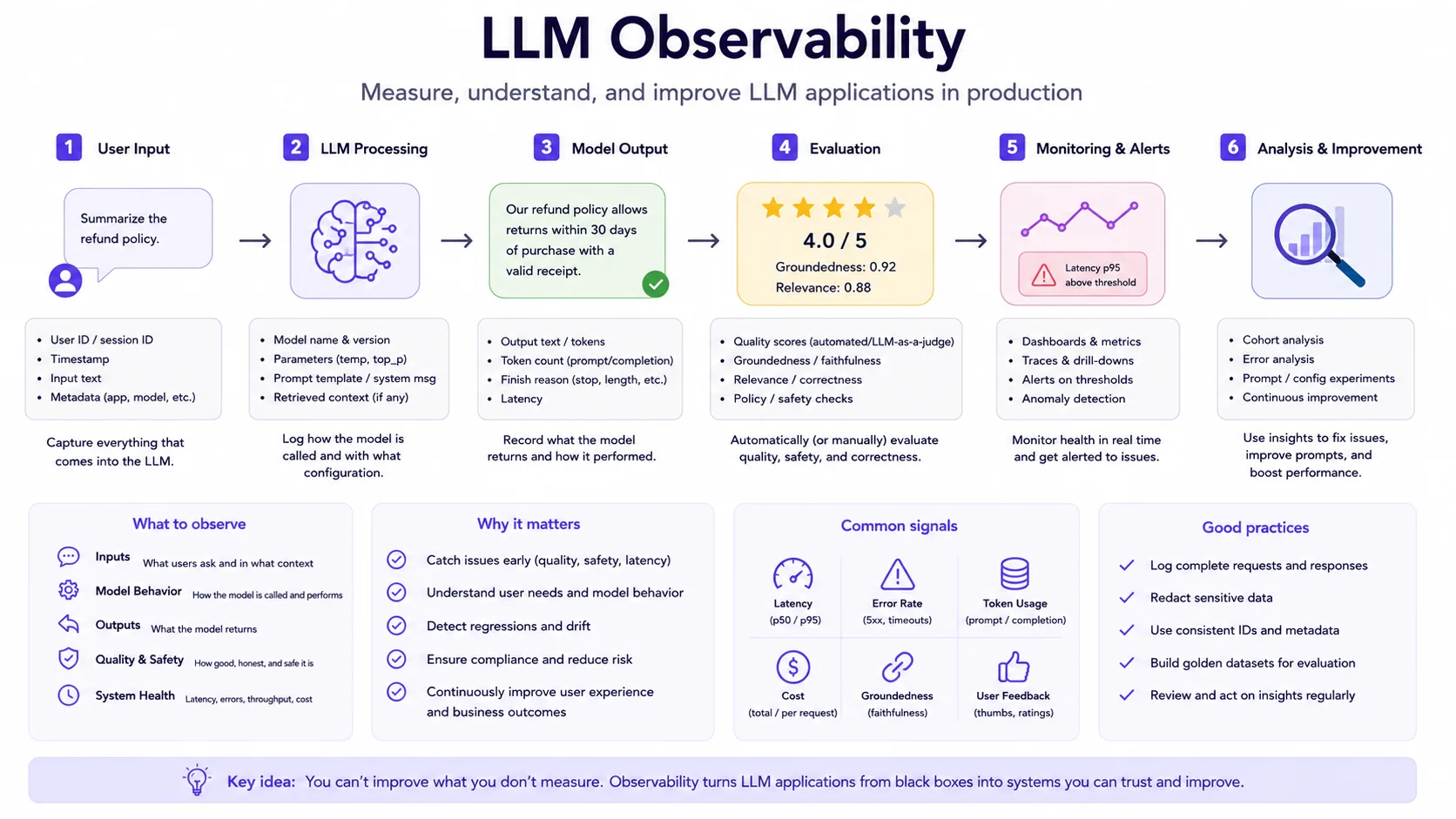
LLM ऑब्ज़र्वेबिलिटी
LLM observability prompts, retrieval results, tool calls, latency, cost, user feedback, safety events और evaluation scores track करती है। Logs privacy-aware होने चाहिए: debug करने के लिए पर्याप्त data capture करें, लेकिन अनावश्यक sensitive data store न करें।
Retrieval-Augmented Generation (RAG) मूल्यांकन
RAG evaluation retrieval quality को answer quality से अलग मापती है। जाँचें कि सही documents मिले या नहीं, answer ने उनका उपयोग किया या नहीं, citations claims support करते हैं या नहीं और final output task पूरा करता है या नहीं।
Production stack के बाहर response evaluation के concrete example के लिए देखें रिस्पॉन्स क्वालिटी टेस्ट, जहाँ उन्हीं prompts को चार assistants में compare किया गया है।
Model Routing
Model routing हर task को सबसे सस्ते पर्याप्त model या workflow पर भेजता है। Simple classification छोटे model का उपयोग कर सकती है; complex reasoning मजबूत model का; risky answers के लिए retrieval और review जरूरी हो सकते हैं। Routing तभी cost बचाती है जब quality controls misroutes पकड़ें।
AI सेफ़्टी रेड टीमिंग
Red teaming जाँचती है कि adversarial या unusual inputs पर systems कैसे fail करते हैं। LLM apps में prompt injection, data leakage, unsafe tool use, policy bypasses, hidden instructions और social-engineering prompts test करें। लक्ष्य controls सुधारना है, perfection साबित करना नहीं।
Large Language Model (LLM) Apps के लिए Cost Optimization
Cost optimization prompt compression, caching, routing, batching, context pruning, retrieval quality, quantization और evaluation को जोड़ती है। सिर्फ cost per token नहीं, cost per successful task optimize करें। तीन retries माँगने वाला cheap model एक बार में काम करने वाले strong model से महँगा पड़ सकता है।