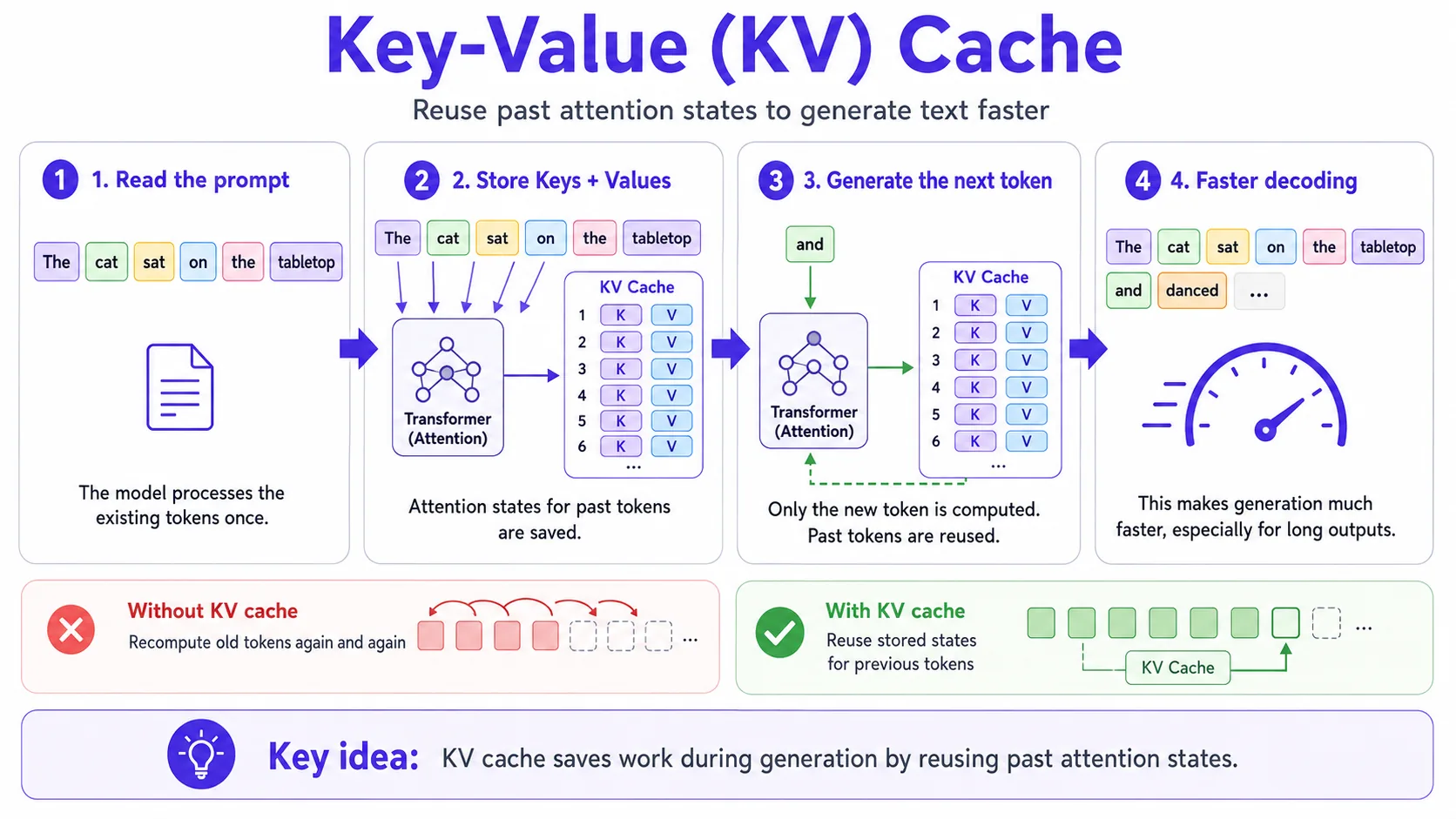
Key-Value (KV) Cache
KV caching stores key-value tensors from previous tokens during autoregressive generation. Instead of recomputing the whole prefix for every new token, the model reuses cached representations. This reduces latency for long outputs but increases memory pressure per active request.
The production control plane for LLM applications
Expert-level LLM systems are less about one perfect model and more about routing, caching, evaluation, safety checks and feedback loops. A reliable platform decides which model to call, which context to retrieve, when to use a cheaper model, when to escalate and how to detect regressions.
Normalizes requests, applies rate limits, attaches tenant metadata and selects candidate models.
Chooses a small, large or specialized model based on task difficulty, latency budget and risk.
Scores retrieval quality, answer quality, citation faithfulness, safety and schema validity.
Tracks prompts, retrieved chunks, model versions, token counts, latency percentiles and failure modes.
Mixture of Experts
Mixture of Experts routes tokens or examples through a subset of specialized expert networks. This can increase parameter count without using every parameter for every token. The tradeoffs are routing complexity, load balancing, communication overhead and harder debugging.
Speculative Decoding
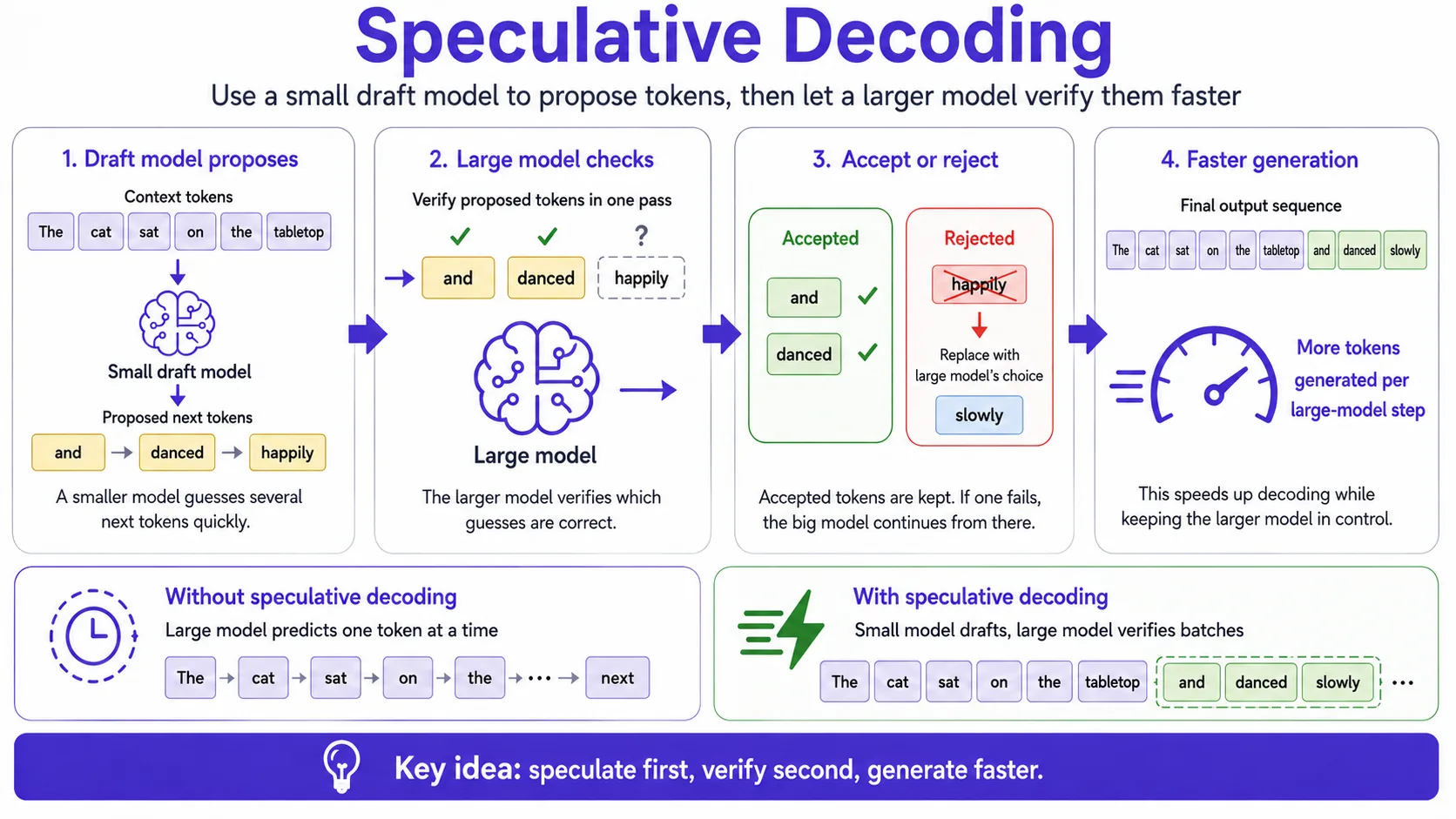
Speculative decoding uses a draft model or draft procedure to propose tokens and a target model to verify them. Exact speculative sampling algorithms can preserve the target model’s output distribution; heuristic variants may trade exactness for speed. Speedups depend on acceptance rate, draft cost, sequence and batch shape, runtime, and hardware.
Quantization
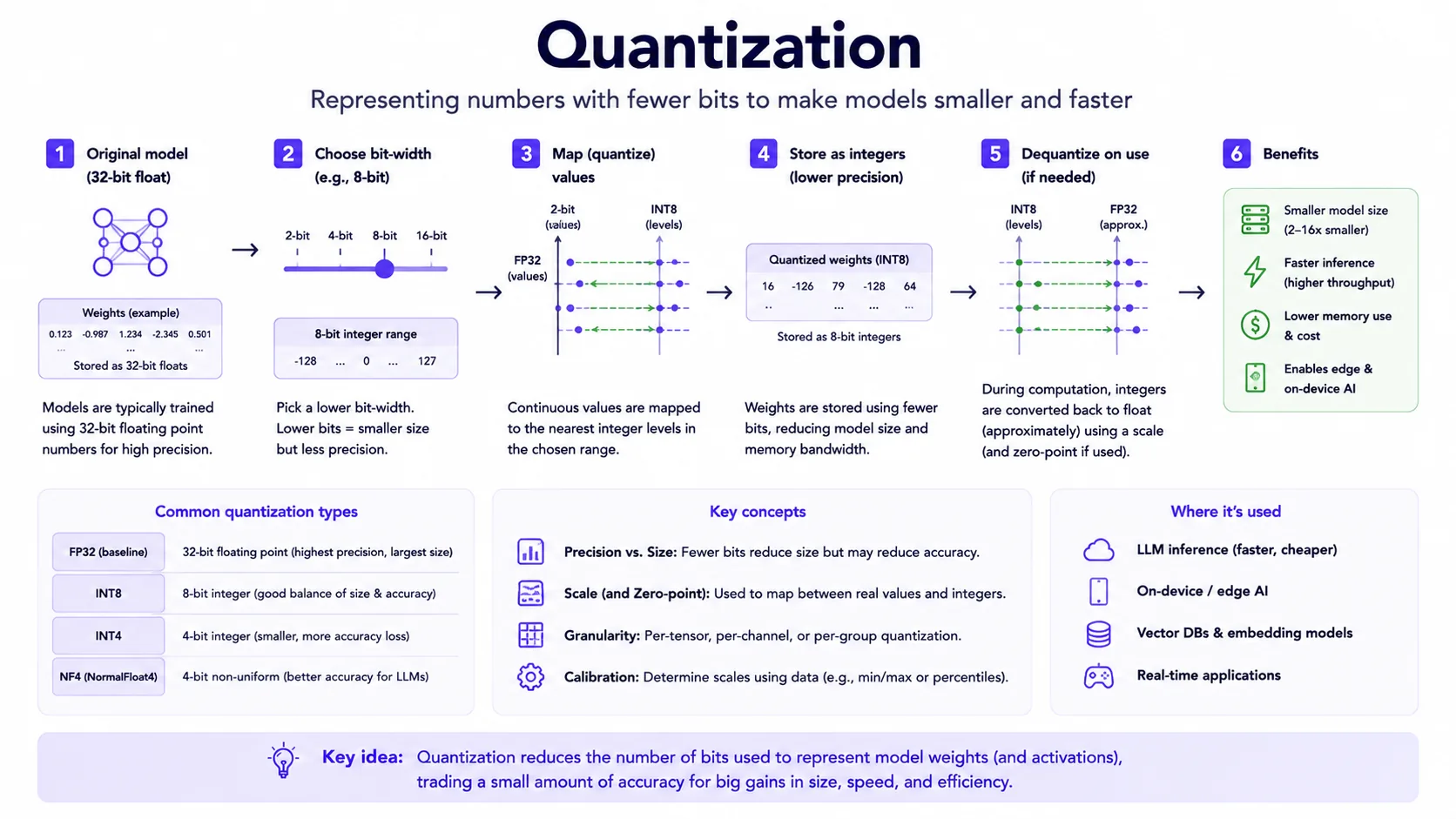
Quantization reduces the precision of model weights, activations, or caches, for example from 16-bit to 8-bit or 4-bit. It can reduce memory use and may improve throughput when the hardware, kernels, runtime, and workload support the chosen format; it can also degrade quality, calibration, or tool-call reliability.
LoRA and Fine-Tuning
LoRA typically freezes the base model and trains low-rank adapter parameters, reducing trainable parameter count and often memory requirements compared with full fine-tuning. It is useful for behavior, style, format, or task/domain adaptation, but it is not a reliable substitute for retrieval when facts change frequently; any knowledge adaptation still depends on data, training setup, and evaluation.
Move from model optimization into preference tuning, observability, evaluation, safety, routing, and cost control.
Direct Preference Optimization (DPO) and reinforcement learning from human feedback (RLHF)
RLHF and DPO optimize model behavior using human or preference data. RLHF typically involves reward modeling and policy optimization. DPO directly optimizes preferences with a simpler objective. Both depend on preference quality and can overfit to what raters reward.
LLM Observability
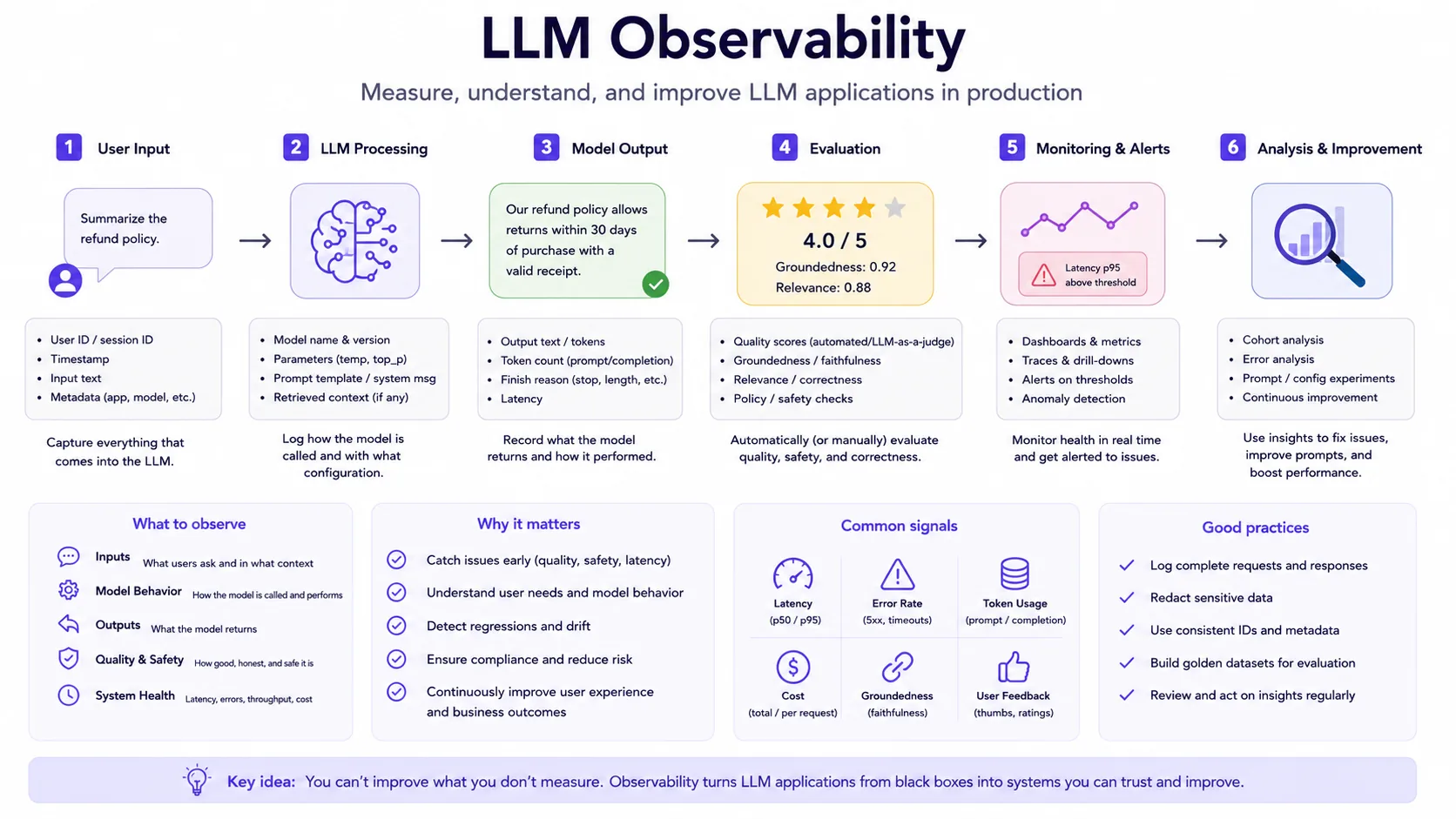
LLM observability tracks prompts, retrieval results, tool calls, latency, cost, user feedback, safety events and evaluation scores. Logs must be privacy-aware: capture enough to debug, but avoid storing unnecessary sensitive data.
Retrieval-Augmented Generation (RAG) Evaluation
RAG evaluation separates retrieval quality from answer quality. Measure whether the right documents were found, whether the answer used them, whether citations support claims and whether the final output satisfies the task.
Model Routing
Model routing sends each task to the cheapest sufficient model or workflow. Simple classification may use a small model; complex reasoning may use a stronger model; risky answers may require retrieval and review. Routing saves cost only if quality controls catch misroutes.
AI Safety Red Teaming
Red teaming tests how systems fail under adversarial or unusual inputs. For LLM apps, test prompt injection, data leakage, unsafe tool use, policy bypasses, hidden instructions and social-engineering prompts. The goal is to improve controls, not to prove perfection.
Cost Optimization for Large Language Model (LLM) Apps
Cost optimization combines prompt compression, caching, routing, batching, context pruning, retrieval quality, quantization and evaluation. Optimize cost per successful task, not cost per token alone. A cheap model that needs three retries can be more expensive than a strong model once.